What Is the Difference Between KLOW and GLOW?
GLOW 70 mg
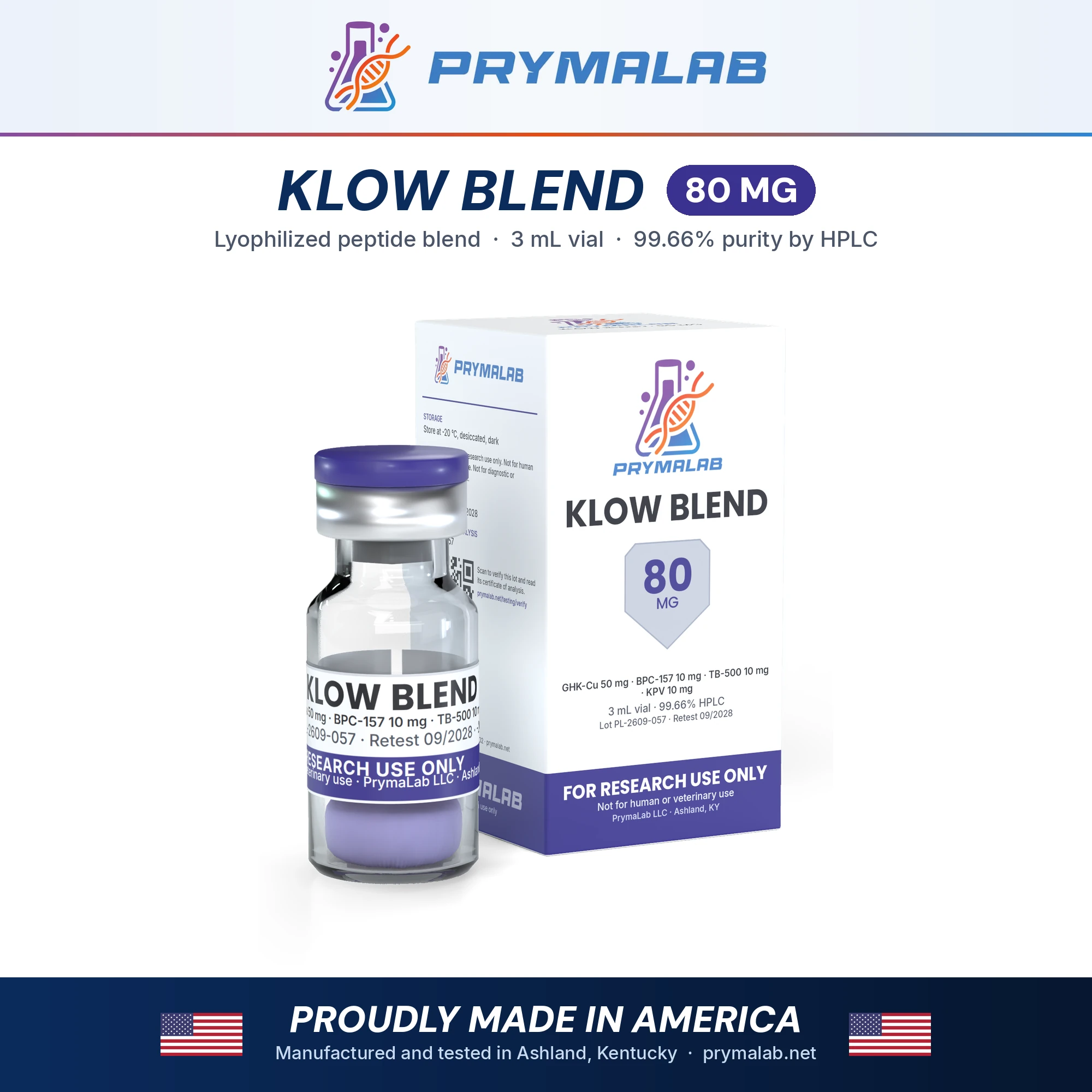
Three components: GHK-Cu, BPC-157 and TB-500. The formula discussed here contains 50 mg, 10 mg and 10 mg respectively, a 5:1:1 mass ratio.2
KLOW 80 mg
Four components: GHK-Cu, BPC-157, TB-500 and KPV. Adding 10 mg KPV produces the 5:1:1:1 ratio and 80 mg total shown on the KLOW certificate.1
The extra 10 mg comes entirely from KPV. The labeled amounts of the three shared ingredients stay the same. This makes the comparison more specific than simply calling one blend “stronger.”
These figures describe the two stated formulations. A blend name by itself is not a complete specification: compare the label and lot document for the product in front of you.
KLOW 80 mg vs GLOW 70 mg: Ingredient Table
| Ingredient | GLOW 70 mg | KLOW 80 mg | Difference |
|---|---|---|---|
| GHK-Cu | 50 mg | 50 mg | Same amount |
| BPC-157 | 10 mg | 10 mg | Same amount |
| TB-500 | 10 mg | 10 mg | Same amount |
| KPV | Not included | 10 mg | Added to KLOW |
| Total blend | 70 mg | 80 mg | 10 mg more total content |
For KLOW, GHK-Cu accounts for 62.5% of the labeled blend mass; each other component accounts for 12.5%. Adding a fourth component changes the share of the whole, even though the three shared amounts per vial are unchanged.
The KLOW certificate identifies its TB-500 as full-length, N-acetyl thymosin β4 with 43 residues. That molecular identity is useful when checking whether a research paper concerns the same material.1
Why Does KLOW Include KPV?
KPV is the three-amino-acid sequence Lys-Pro-Val. Its research background helps explain the interest in adding it to a blend already containing GHK-Cu, BPC-157 and TB-500.13
In a 2008 study, Dalmasso and colleagues found that KPV reduced inflammatory signaling and cytokine release in cell experiments. Oral KPV also reduced measures of inflammation in chemically induced mouse colitis models.3
What the study supports
A reason to investigate KPV in intestinal inflammation research, based on specific cell and animal findings.
What remains a separate question
Whether adding KPV to this finished four-component blend improves outcomes in people. The study did not compare KLOW with GLOW or test either commercial blend.
That distinction keeps the comparison useful: KPV adds another molecule with its own research history, while a claim of better real-world results would need a direct comparison.
What Positive Results Do People Describe With KLOW?
A digestive-comfort example comes from cvStiph. In a first-week KLOW post, they described tolerating previously troublesome foods, including sandwiches and yogurt with granola, with much less discomfort afterwards. Their food intake and training also changed during that period.4
In a later comment, the same person described better workout recovery and fuller-looking hair. These are one person’s observations, with the original posts available below.5
The KLOW benefits and reported results page expands the other selected accounts of smoother-looking skin, nail strength, changes in shedding and easier movement. Each account retains its own timeline and context.
These selected positive experiences do not show that KLOW outperforms GLOW, or that KPV caused a particular result. They are personal accounts, not a controlled comparison or verified reviews of the products pictured on this website.
Keep the Blend and the Container Separate
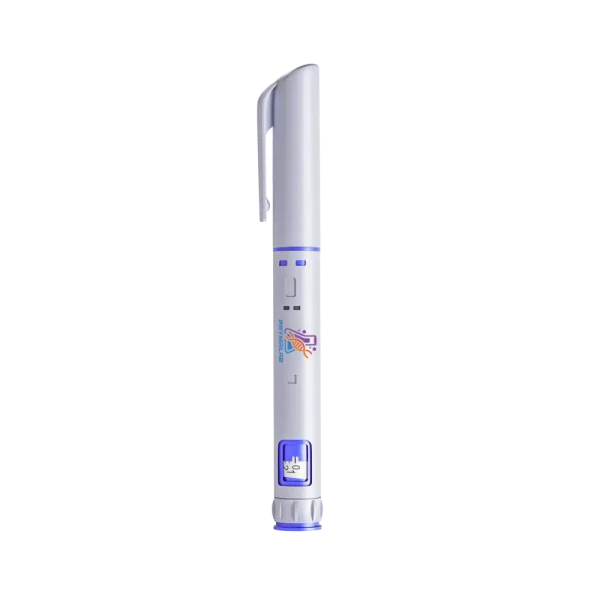
KLOW is featured here in two formats: an 80 mg powder vial and a 3 mL preloaded pen at 80 mg/mL. The pen therefore contains 240 mg of labeled blend, with the same 5:1:1:1 proportions.16
A formula comparison answers which ingredients are present. A format comparison answers whether the container holds powder or solution, its total content and the documentation that accompanies it. They are different parts of choosing a product.
Ingredient amounts
Compare each component, not only the headline milligram total. Equal masses of different blends can contain different amounts of a shared ingredient.
Community amounts
A reported KLOW amount should remain attached to that person’s formulation and schedule. A GLOW number cannot simply be relabeled as a KLOW protocol.
Is KLOW Better Than GLOW?
Does a fourth ingredient make KLOW better?
It makes the composition different. The confirmed change in these formulas is 10 mg of added KPV. The ingredient study and personal accounts discussed above do not establish that the four-component blend produces better results than the three-component blend.
Does GLOW already contain KPV?
Sources and Product Documentation
- 1KLOW Blend 80 mg certificate of analysis
Original in-house report, lot PL-2609-057 / certificate PL-26-00057. Composition, component identity and powder-lot scope. - 2PrymaLab GLOW formulation overview
Supplier description of the GLOW 70 mg composition: 50 mg GHK-Cu, 10 mg BPC-157 and 10 mg TB-500. - 3Dalmasso et al., 2008: KPV and intestinal inflammation
Gastroenterology. Primary study of cell signaling and chemically induced mouse colitis; not a study of either blend. PMID 18061177. - 4cvStiph: first-week food-tolerance account
Original r/BodyHackGuide post. Food intake and training changed during the same period. - 5cvStiph: later account of digestion, recovery and hair
Individual follow-up in r/BodyHackGuide; an unverified personal experience. - 6PrymaLab KLOW autoinjector listing
Labeled fill, concentration, composition and the stated scope of the supporting peptide-lot certificate.
Sources reviewed 2 November 2026. Personal reports, ingredient studies, product specifications and analytical results are identified in context.